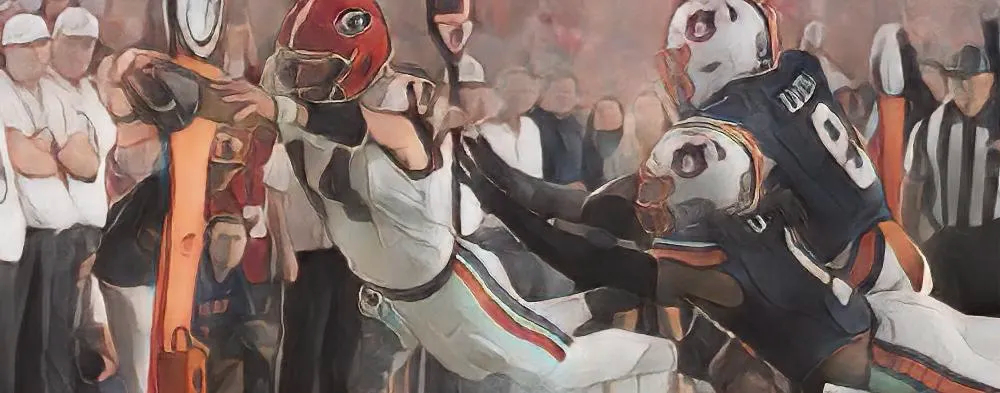
Let all the Bulldog faithful rally behind the men who now wear the red and black with two words, two simple words which express the sentiments of the entire Bulldog Nation: Auburn Sucks.
— Message Board Geniuses (@BoardGeniuses) June 8, 2026
*Checks notes* – Lambos and fat stacks of cash. Got it. While I am on Texas’s side here, I’d say the pot is calling the kettle unethical, just one is more “legally” ethical now that we’re in the era of NIL.
And, of course, it wouldn’t be a day ending in y if we didn’t have someone from our traditional SEC orange fan base whining about why they couldn’t get away with it, too.
— Message Board Geniuses (@BoardGeniuses) June 8, 2026
“Why don’t we have a corrupt judge?” Boo hoo. Talk to a Georgia fan about the local legal system working against you, then wonder how we managed two National Championships while getting pulled over every other day of the week, and let’s resume the conversation after.
We have a lot of problems to solve as a country, but the President has decided to wade into the NIL mess created by the NCAA, its membership, the jackass-in-chief Mark Emmert, and the antitrust plaintiff’s bar with an executive order called “Saving College Sports.” I’m not going to get into the constitutional law of this order or the politics of this, and this is not the space to debate either of those topics … Derek can take that up on Wednesday if he so desires.
After reading the order, here are a couple of items I thought were interesting:
Overall, did the NCAA’s attorneys write Section 1 of the order?
The rationale for the order is all wrapped up in the NCAA’s past arguments for maintaining the façade of amateurism and current arguments for some kind of antitrust exemption. Olympic sports, academics, state laws, system where schools can buy the best players, and women’s sports are all arguments of the NCAA for intervention.
“It is common sense that college sports are not, and should not be, professional sports …”
We all need to face that college football and men’s basketball especially in the Power 4 conferences are now professional sports. The college sports industry made all of the decisions since NCAA v. Board of Regents of the University of Oklahoma and the University of Georgia in the interest of generating more money over time.
The bag men plus the facilities arms race show that college athletes have a market value. Church steeples, Trans Ams, McDonald’s bags, and $100 post-game handshakes were the underground labor market while $10,000 massage chairs, miniature golf courses and other perks in athletic buildings showed how player compensation was hung up on the balance sheets of these associations. Eventually, that market value led to the O’Bannon decision on the EA Sports NCAA game franchise where the NCAA hid behind the fig leaf of jersey numbers while the demographics just happened to match the individual players represented leading to the total cost of attendance (TCOAS) scholarship. Of course, additional litigation has essentially blown up the guardrails of the TCOAS into pay-for-play thinly veiled as NIL.
The bottom line is that as the money in these 2 sports exploded, those participating were being left behind.
“… [I]t is the policy of the executive branch that third-party, pay-for-play payments to collegiate athletes are improper … This policy does not apply to compensation provided to an athlete for the fair market value that the athlete provides to a third party.”
The executive branch appears to be lining up behind the House settlement on this topic. Payments made by NIL collectives? Bad. Payments made similar to the Olympic model? Good. I admit I’m on the side of the Olympic model, but that doesn’t mean I agree with this mechanism.
I’m sure Jeffrey Kessler and his firm are already lining up to go after the order for injunctive relief. I tend to give people the benefit of the doubt on their motivation … therefore, I lean that Kessler wants the best for the members of his class. I also am cynical about actions like this based on my day job. If there wasn’t a pot of money at the end of the rainbow for his firm, his firm probably wouldn’t be interested.
Is Section 4 an attempt at an antitrust exemption by fiat?
What does “unreasonably challenged” mean? I don’t think any of the NIL litigation to this point has been unreasonable. I also don’t think anyone wants the “rights and interests of student-athletes” harmed and the “long-term availability of collegiate athletic scholarships and opportunties” reduced.
I’m not sure the Attorney General and the Chair of the FTC can do a damn thing if NIL makes a school decide to shed sports.
“Protecting Development of the United States Olympic Team”
What sports at this point purely depend on amateurs generally and college athletes specifically for participation in the Olympics?
Tackle football isn’t an Olympic sport yet. Basketball? That ship sailed a long time ago with the 1992 Dream Team on the men’s side and soon thereafter with women. Swimming? Katie Ledecky famously left the Stanford swim team while remaining in school to pursue endorsements while also swimming professionally, and Michael Phelps never put on the maize and blue while attending Michigan to train with his long-time coach. Gymnastics? Many of the women are past their prime at college age, and the GOAT never wore a college leotard. Hockey? The Miracle on Ice was a long time ago, and the Olympics are now the NHL all stars playing for country. Track and field? Most of the US athletes are professionals now across the board even though they were collegiate athletes at one time.
Summary
Is this order like Texas football … all hat, no cattle?
It would seem so because there is no real policy, and any policy is likely to go down in flames under judicial oversight.
Is this order telling Congress what framework the President is willing to sign in a bill like the SCORE Act?
In my opinion, winner, winner, chicken dinner. He is telling the 535 members of Congress he is willing to sign a bill that reforms some of the problems of college sports while maintaining that student-athletes are not employees with collective bargaining rights.
What do you think? Let us know in the comments. Keep it civil and out of the political realm. If you want to do that, take it to the Playpen.
AnOSU fans everywhere should be embarrassed by this proposal.
Next thing we know, the Ohio legislature is going to tell the Ohio state law enforcement apparatus to arrest Javon Bullard the next time he plays in Cleveland or Cincinnati.