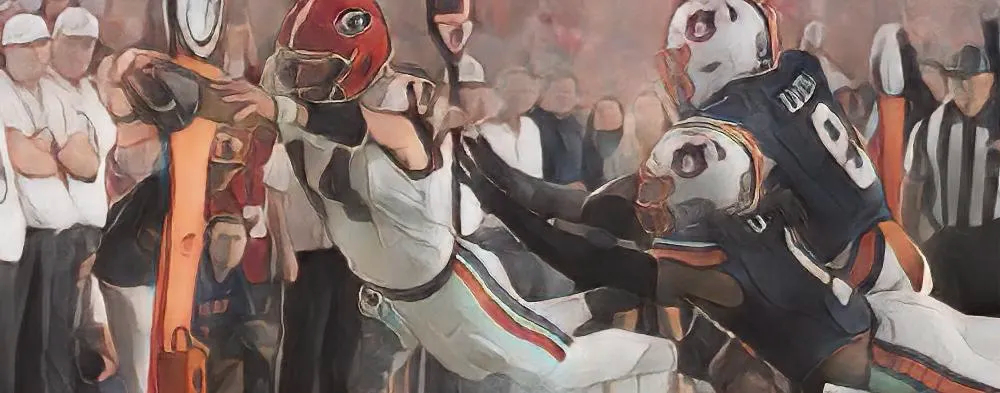
Let all the Bulldog faithful rally behind the men who now wear the red and black with two words, two simple words which express the sentiments of the entire Bulldog Nation: Auburn Sucks.
I’m not surprised that Zach Branch is doing well with the Falcons. Per this report, he’s one of the leading receivers through Atlanta’s fall camp.
What I didn’t know was this:
No NFL team has more Georgia Bulldogs than the Falcons, who have six Georgia players. Atlanta will miss Georgia linebacker Jalon Walker this season. Walker suffered a torn ACL in training camp and will miss the entire 2026 season.
No, not the Walker injury…Atlanta has the most Georgia Bulldogs? Who knew?
Of other interesting news is that Cash Jones is tied with Bijan Robinson for catches in the fall, as well.
I heard he’s a good third down back when you need to make up a lot yards on a check down. Or something like that.
Maybe you heard the NCAA rejected the fifth-year senior injunction on Wednesday, so we’re pretty low on the Hoosiers whereas many pundits are arguing they should be number 1. Maybe that’s true, maybe it’s not.
Safe to say, though, that our Top 10 are likely CFP contenders. Alabama at 9 is the only one I question a little, given DeBoer’s poor performances in the final three games of the 2025 season, which included two curb stompings from Georgia and Indiana. I’m not big on Alabama and neither was the SEC media, but they’re still Alabama, and until we beat them at their place, they still own us.
We also included several Big XII teams here, and we’re clearly not sold that the PAC is back, as the top vote getter for the Conference was Boise State, and they only made “others receiving votes”.
Overall, I think it’s a solid poll. Folks would disagree with the Dawgs at number 1, but at least we’re honest about our biases and not trying to hide behind the argument of “quality losses” as a means to promote a conference to the top.
I mentioned this yesterday and feel like continuing it today. For a moment, I was thinking that this has been the hardest offseason of blogging to date, but for a few reasons I’ve noticed, and I hope those of you who scour the internet have noticed it, too:
There is way less intel coming out of camps and scrimmages than in years past. Even the Georgia social media team isn’t releasing highlights of scrimmages. It’s very quiet.
I think that #1 is by design. Since you can essentially reload and retool your team via NIL and the Transfer Portal yearly, coaches are less inclined to let out “leaks”.
The intel that does come out is useless. Of note, I’ve read through some of last weekend’s scrimmage, and here’s the breakdown…and honestly, you could’ve filled in the blanks on this by just guessing:
The offense looked like crap, receivers couldn’t get separation and we were 0/30 on deep balls.
The defense is probably that good.
A tight end (Redell) is Him.
A running back looked great (Peanut) and one was more consistent (Bo Walker)
No news on special teams.
A freshman is going to be a game one starter.
So, you have to put together the pieces by yourself, meaning what comes out on the field is anyone’s guess. We know the potential starters, and maybe a few surprises. Yahoo. The days of Phil Steele’s guidance and preseason magazines are gone. Your guess is as good as theirs. For giggles, I decided to fantasize if I could be one of them (the social media football pundits), then I realized I’d have to ESPN myself, and here’s the image I got that plays with the modern day college football prognosticator:
It’s like I’m looking at my son if he was crossbred with Theo Von and Pat McAfee. Shudder. Also, if that’s me, someone is grooming me to not have ear hair and nose hair. I’m almost offended.
Anyway, if you think I’m joking, take a look at this take, from someone who gets paid really good money to make stupid takes like this:
— CBS Sports College Football 🏈 (@CBSSportsCFB) August 11, 2026
CBS must not have a research department, but they also employ Danny Kanell, so there’s that. How many times and how often do we have to hear that Texas is back, Texas owns the SEC, Everything’s Bigger in Texas, yadda yadda just to watch them faceplant in the biggest game of the year?
Arch Manning is 'talking shit' at Texas football practice. Here's why that's a big deal for the Longhorns, who no longer have to coax their quarterback into being himself: https://t.co/YTnsCaugqL
Ohhhhh Aaaaachie! He used a foul word! What a badass and, man, Texas is gonna be hell on wheels! I put the category in the Mumme Poll of “For all the resources and money thrown at them, that’s the best they could do? (Falling short of high expectations)” in there precisely for Sarkisian, who, for all intents and purposes, should be canned for doing less with more.
Kudos to Kirby for reserving NIL for upperclassmen, it’s almost as if he should join Saban in retirement in driving NIL regulation to keep it out of the high schools and recruiting and reserve it for results on the field. If you asked me for my opinion on reform, I’m fine with the open market, but keep it for sophomores or redshirt freshmen and above. Do something to prove your worth beyond beating the hell out of Our Sister of Mercy’s JV squad and social media bravado. If you come in as a freshman and earn playing time and play at a high level, the open market is yours. Good on you, and a guy like Kirby is your friend and mentor, not your paycheck. He’ll make sure you make eight figures in the NFL, which will make the NIL days look like chump change.
As it should be.
Until we get to that level of sensibility, we have what we have. It’s a shitshow, and there’s no better way to describe it.
That being said, lay forth your opinions and know, no matter who retorts, that your opinion holds as much gold value as anyone else’s because it’s 2026, this is the state of College Football, and the comments section is really where the true knowledge is at.
Pads are clapping and helmets are cracking as we speak. Our long slow offseason of discontent is about to conclude, and ball will be on our TVs or itineraries in less than a month. Hell, I’m so eager I actually considered buying the $20 ticket packages they advertised for Tech versus Colorado. I’m that hard up for football, even as shitty as some of the noise had become. And I like hot dogs and Coke. Sounds like a fine idea.
Note: relax, I didn’t but any Tech tickets. Yet.
It’s almost here, Refugees. Rejoice. And have away in the comments.
Get to voting. It’s your chance to silence the critics and let the world know that the wisest of football fans come to GTP Refugees, and everyone else can kick rocks.
Vote throughout the day and week and I’ll share the results once the votes are in. Poll closes on Wednesday, August 12th at 10:19 pm. Why 10:19 pm? Because I can, that’s why. And also because I’ll forget and it’ll stay open and I can blame myself for picking an unusual time.
Also, there are two bonus questions for the preseason poll…
Which new SEC Coaches will be most successful in 2026? Also an attached survey on why you think they’ll do well.
Which veteran SEC Coaches will no longer be with the program either during or by the end of the 2026 season? Similar survey on why you think that is included, as well.
For those of you who were following the social media wanderings of Freddy, the German World Cup fan (or American PsyOp, depending on the minerals in your hat) who visited America and fell in love with the things we consider mundane or perverse, like Waffle Houses, Ella Langley, or Alabama. What a delightful tale it was.
Well, Freddy is coming back…this time, to partake in the legend he heard that is College Football.
We’re planning another USA trip this fall!🇺🇸
It’s going to be a road trip with college football as the main focus, but we’re also planning to check out plenty of other sports and unique American events.
Of course he says other sports, so he may be able to see some NFL games, some college basketball games, but let’s face it, for the timing, he’s heading to college.
So for today’s musings, where would you direct Freddy for the BEST college football gameday experience? To make it interesting, let’s not play homers and suggest a Georgia game. Georgia versus WKU wouldn’t make for a memorable experience. Oklahoma at Georgia might, but there are other experiences out there that might trump the Athens gameday experience.
Night games at Baton Rouge.
Ohio State at Texas? Or “The Game”?
A game at Notre Dame?
Alabama versus Auburn.
The World’s Largest Outdoor Cocktail Party is off the table, since it’s not in Jax this year and won’t be for a couple of years.
So where would you point someone for a purely otherworldly college football experience? Why?
On a slow Sunday where not much was leaking out of Georgia football scrimmage news (what happened to their social media posts bragging about it, btw?), I found myself nostalgic and watching old Georgia tape.
What was amazing was trying to break down tape on Zach Branch’s touchdown against Alabama in the SECCG.
Watch it in real time first:
So what did you see? From first glance, it looks like a desperation play that worked. On a deeper glance, it was far more from that.
First, let’s look at the setup:
Empty backfield, trips left, with Luckie on the line and then they send Cash Jones in motion. It’s 3rd ad 11, and how many times have we (and Alabama) seen this scene repeat? Funny thing is what happens after the motion.
As would be expected on most quick screens, the interior defensive lineman is putting pressure on Gunner. But look at the fake. Jones is looking like he’s catching the pass.
Luckie, on the other hand, is double blocking, which if you ever questioned his ability, is a testament to what a stud he is in the TE room.
Meanwhile, London Humphries is blocking down on Dijon Lee for Alabama, seen here:
Lee is the only person to get a hand on Branch, and he’s standing at the first down line. If it weren’t for a touchdown, it was for a first down. But, so it goes, as Vonnegut says.
Maybe it’s not all accidental failure and success, as we thought. Maybe it’s something more.
How many different P4 teams have you seen play in person?
Quick count for me is around 40. Throw in some G6 teams, it’s way more from my days at Georgia Southern, too.
Now, as a bonus question, which opposing team had the nicest/best fans?
Hands down: Wisconsin. The 1998 Outback Bowl was a fun time and a nice group of people. I could say the same, if I’m being honest, about Notre Dame and Purdue fans, too. Decent folks.