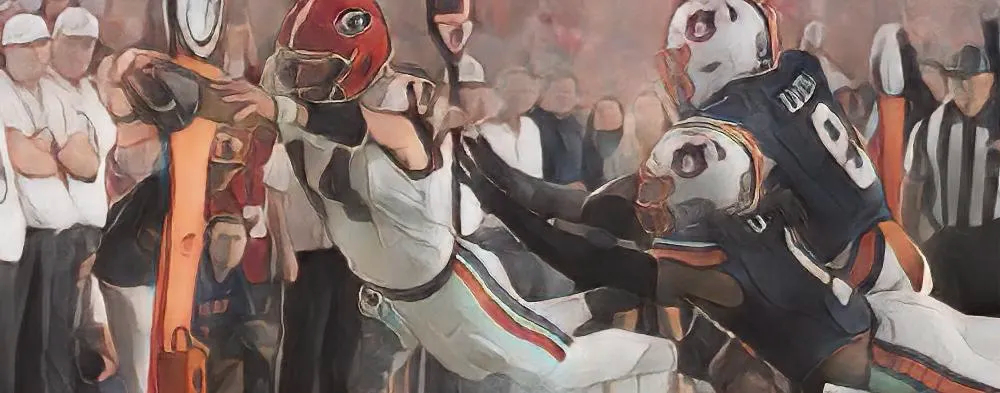
Let all the Bulldog faithful rally behind the men who now wear the red and black with two words, two simple words which express the sentiments of the entire Bulldog Nation: Auburn Sucks.
One thing I noticed, while watching the CFP this year, is that for a team that everyone marveled over in Indiana, I couldn’t help but notice that they didn’t do anything “dazzling” on offense. But to be honest, maybe it’s because I never really watched them during the regular season, but I was expecting big plays, bombs, etc. Nah, we didn’t get that.
Instead, we got stout defense and efficient offense. Nothing fancy, but it works.
But was that Indiana alone? In all honesty, I don’t remember a lot of explosives for our guys this year, maybe only when we played someone else, like Tennessee. Also, the data guys keep insisting that Georgia is in the top 10 in offensive play efficiency but dang if it just doesn’t feel that way. Turns out, that not just a Bobo thing.
Possessions per game have steadily declined since 2015 Points per game reached a 15-year low Plays per game have held steady in the last three seasons Points per possession are maybe leveling off? Plays per possession jumped to a 19-year (all-time?) high pic.twitter.com/lXoe8DQZp9
A few things at play – the 2023 clock change where the clock continues to churn after a first down, as well as transfer portal movement, could be contributors to the problem. A deeper dive into the post lead me to CFB Graphs by Parker Fleming, who did a data analysis on what’s been happening to the explosives as of late.
After reading through and processing his visualizations, he landed on a simple premise: the defenses have gotten better. Specifically, the biggest shot in the arm that prevented explosives was better first and ten defensive play. Seems like everything after that dictates whether more explosives can occur, so your first and ten situation is important…but defenses have that sniffed out.
Is this because of “see ball, get ball” reactivity of beefing up defenses through the portal while the new-look offense on the other side is still largely figuring out the playbook? Offenses seemed to be trending towards passing more on first and ten, as a result of 1st and ten yardage situations yielding little forward traction by running the ball first.
While this is all very Moneyball-ish, it could explain some of the decision making that makes us scratch our heads on Saturdays. Fleming ends on this note:
College football has largely trended towards the offenses in the 21st century, but it appears the pendulum is swinging back towards the defenses, at least in terms of explosive plays. Defenses have caught up. The big play isn’t dead, but it is much tougher to come by, and as a result, offenses need to push innovation, adjust their personnel preferences, and prioritize consistent success to provide more opportunities for the offense to get that big play.
On one hand, we’re in good hands with Kirby since defense is his forte…but that part of about offensive innovation might worry some readers when it comes to Mike Bobo. But if Georgia is one of the most efficient offenses in the country, then it would seem we’re meeting the call for consistent success in the latter part of that statement.
Oh, and personnel preferences…meaning, like, Cash Jones on 3rd down? That’s another conversation for another day.
There’s much ado about the age of the Indiana football team with their 23 and 23 year old athletes, benefactors of a loose portal and COVID year exemptions. So how do we keep this new found strategy going once the COVID exceptions are gone?
Here’s one way.
The FBS head coaches voted unanimously to expand the eligibility for redshirt years from four games to nine.
This is just a recommendation that will be put forth to the Division I committees.
So…we can play a freshman or JUCO transfer in nine of the games (isn’t that the number of conference games or something?) and then declare the year a redshirt year and get more time with him even after a nearly full season of play.
At this point, why not? Heck, give them two redshirt years while you’re at it.
Last week I had a brief exchange online with one of our esteemed commenters (Nil Butron is a Pud) about the middle 8 (the last 4:00 of the 2nd quarter and the first 4:00 of the 3rd). Coaches talk a lot about winning that 8:00 of game clock time. I went back and looked at last season against Power 4 opponents to see what there is to the story:
Peyton Woodring kicked a 55 yard field goal just before the start of the middle 8. The Dawgs get a 3 and out. The Dawgs grind out an early 1st down and then end the half with a 57 yard Thorson punt. The offense takes the 2nd half kickoff (we must have won the toss and deferred) and marches 75 yards for a touchdown. With the way the defense was playing, the game was virtually over, and the offense proceeded to score 3 TDs in their next 4 possessions. The Dawgs won the middle 8, and it jumpstarted a route of the Tigers.
@ Kentucky – score entering (0-3) exiting (3-9)
The Dawgs had forced a turnover that could have been a scoop and score, but a 3 and out enabled another Woodring field goal to tie the game. Kentucky grinds out a field goal to end the half enabled 4(!) 3rd down conversions and all of them on the ground. The Wildcats then take the opening kick of the 2nd half and grind out a 6:00 drive culminating in another field goal. The Dawgs playing from behind eventually get a 1-point win in Kentucky. A great example of allowing teams to hang around by shortening the game almost bit us. Kentucky won the middle 8.
@ Alabama – score entering (7-28) exiting (15-30)
In a game I’ve still never watched, the Tide is driving for a back-breaking score as the middle 8 begins. The Dawgs’ defense finally bows up stopping the Tide on 4th and 1 at Dawgs’ 35. Alabama intercepts Carson Beck on the next play just to turn the ball back over inside the Georgia 10. Bama gets a safety to add 2 points. A fumbled punt by Anthony Evans almost leads to another backbreaking score. The Dawgs do nothing with the 2nd half kickoff after getting good field position, and Bama closes the middle 8 with a punt of their own. Bama wins the middle 8 with the safety but, more importantly, by keeping the Dawgs off the scoreboard for that stretch. Who knows what happens if the Dawgs score after the 4th down stand?
Auburn – score entering (7-3) exiting (14-10)
Both teams score a TD in the middle 8 on the day we honored the Senator. The Dawgs are driving as the clock hits 4:00 in the 2nd quarter. A holding penalty on a 2-yard run on 3rd and 1 and an ensuing sack knocks the offense out of scoring position (it must have been into the wind because a 51 yard attempt by Woodring isn’t a huge deal). Freeze then makes a terrible clock management decision with 1:33 to go and backed up inside the 10. He calls a pass play at 1:20 that falls incomplete and stops the clock. The Tigers fail to get a 1st down, and Georgia scores a TD on a short field as Beck hits Lovett for 11. The Dawgs fail to take advantage of the opening kick in the 3rd quarter by going 3 and out. Auburn gets a long run by Jarquez Hunter to cut the lead. While the scoring was tied, I give the Dawgs the edge due to Freeze’s terrible clock management mistake.
Mississippi State – score entering (20-10) exiting (34-17)
The real Dawgs almost played the middle 8 perfectly as the Dawgs were driving for a Lawson Luckie touchdown when the middle 8 started. KJ Boldin makes a big play with an interception on a deep pass with 27 seconds left. Carson Beck engineers a great 30 second drive only for Peyton Woodring to miss a 55-yard field goal. The Dawgs strike quickly to open the 3rd quarter with a touchdown in less than 2:00 to start the 3rd quarter to take what many in Sanford thought was a rout in the making. 2 first downs by penalty on 3rd and long enable the Bizarro Dogs to score a TD in their middle 8 possession. The Dawgs win the middle 8 but leave a lot of meat on the bone.
@ Texas – score entering (20-0) exiting (23-8)
The teams exchange punts at the beginning of the middle 8 before Jalon Walker and Damon Wilson introduce Arch Manning to SEC football at the highest level with 2 sacks for 22 yards with less than 30 seconds to go in the half. Peyton Woodring likely put the game out of reach with 44 yard field goal as the clock hits 0:00 to shut up the 100,000+ gathered in Austin. The onside kick that really wasn’t opens the 2nd half and gives Texas field position. Eventually with the help of a couple of penalties, Texas breaks through to begin an attempt at a comeback. Texas wins the middle 8 on the scoreboard, but Georgia makes a comeback difficult.
The teams exchange 53 yard field goals prior to the halftime break. A 4th down conversion enables Florida to kick their field goal right before the half. To open the 2nd half, the Georgia defense gets the 3 and out just to have a 3rd interception 2 plays later close to midfield. The Dawgs hold and then score the game-tying touchdown after the middle 8 concludes. I have to give the edge here to the Gators especially after so many scoring flurries have happened by the Dawgs at this point in the game in the past.
@ Ole Miss – score entering (7-13) exiting (10-16)
The Rebels reach for a long field goal at the beginning of the middle 8 to take a 9-point lead into the locker room with the Dawgs taking the 2nd half kickoff. The Dawgs drive the length of the field to open the 3rd quarter even after a couple of penalties. They get to the 10 and sputter to the 5 where Woodring kicks a short field goal. Similar to the prior week, Ole Miss gets the edge although the deficit did not change as they force the Dawgs to take over 5:00 off the clock just to get 3 points. Everyone knows the game turns with turnovers and offensive inefficiency after the middle 8.
The Vols are driving for a TD to retake the lead powered by a 27 yard run by Dylan Sampson with a little less than 2:00 to go in the half. Carson Beck brings the Dawgs back to kick a short field goal to enter the break tied at 17. The Dawgs get a stop to open the 2nd half after the Vols move the ball for the first 2 minutes. On the 1st possession, the Dawgs overcome a 1st and 24 caused by an offensive pass interference penalty as the Dawgs take the lead for good in a 8:00 TD drive. The Dawgs win the middle 8.
As the middle 8 begin, the Dawgs are driving until a Dom Lovett fumble allows the Jackets to take over at their 37. Then Kirby has a brain cramp in clock management after the nerds start driving. After stopping a run on 1st down at the 20 and less than a minute in the half, Kirby decides to call a timeout and gives the head nerd a chance to go for a TD when it appeared he was happy to kick a late field goal when they had no timeouts. Tech scores a TD to extend the lead into the half. Beck leads a great drive, but Woodring misses a long field goal at the buzzer. The teams trade quick punts to open the 3rd, and the Dawgs break through on their 2nd middle 8 possession. Kirby then makes a mistake that could have cost the Dawgs the game by attempting the 2-point conversion. You have to give the middle 8 to Tech as a result of a couple of sideline blunders.
Texas @ MBS – score entering (3-6) exiting (10-6)
10 plays, 75 yards, 4:33 off the clock and Georgia scores the SEC championship game’s first TD as Gunner Stockton comes on in relief of the injured Carson Beck. Dawgs win the middle 8 on the scoreboard, and Texas never regains a lead as the Dawgs take home the trophy.
In what was possibly the worst middle 8 since the 2021 SEC championship game loss to Alabama, the Dawgs yield 17 points. Poor run defense sets up a long field goal to start the 8 minute period. Kirby makes possibly the dumbest decision he has made since running the fake field goal in Baton Rouge in 2018. He decides to push for points and gets Gunner blindsided for a fumble than the Irish immediately turn into 7. Then to rub salt in the wound, the Irish infamously run the 2nd half kickoff back to make the score 20-3. The game wasn’t over, but it made the type of game we needed to play to get the win impossible.
Summary
The last 2 games of the season are exactly what the “middle 8” are all about. Executed well, a team can put games out of reach or grab momentum, and, of course, the opposite is true. What I really saw is that coaching can make or break that stretch. Kirby did some of his best work in the middle 8 (Clemson and both Texas games) and made some terrible errors as well (Tech and Notre Dame, most notably).
Smart aggression seems to be the solution. Turnovers can change the middle 8 more dramatically than at any other time. Message Board Geniuses aren’t going to be kind when the middle 8 don’t go your way.
What do you think? Let us know in the comments below.